Brewing
Gongfu brewing
- Water temperature
- 75 °C
- Tea amount
- 5 g
- Water volume
- 100 ml
- First steep
- 10 s
- Time added per infusion
- 5 s
- Infusions
- 3


Xiàngyuán wù yá
Choose a brewing method. Start with the recommended quantities and time, then adjust to taste.
Brewing
Brewing
Taste
Tea encyclopedia
Category: Regional Chinese green tea; national geographical indication product.
Category: Regional Chinese green tea; national geographical indication product.
Coordinates: 33°07′–33°42′ North latitude, 109°–110° East longitude. Southern slope of the Qínlǐng Mountains (秦岭, Qínlǐng).
Origin: China, Shaanxi Province (陕西, Shǎnxī), Zhen'an County (镇安县, Zhèn'ān Xiàn), Shāngluò City (商洛市, Shāngluò Shì). Core production area — Xiàngyuán Village (象园村, Xiàngyuán Cūn) in Dárén Township (达仁镇, Dárén Zhèn), as well as Cháipíng Township (柴坪镇, Cháipíng Zhèn) and Shīzikǒu (狮子口, Shīzikǒu).
Type: Green tea (绿茶, lǜchá), unoxidized.
Cultural Significance: Zhen'an is known as the "hometown of chestnuts" (板栗之乡, Bǎnlì zhī Xiāng), and the proximity of chestnut forests to tea gardens gives the tea its unique chestnut aroma. Xiangyuan Wu Ya has become a symbol of the county and the calling card of southern Shaanxi's tea industry. The traditional technique of "tea compacting with wooden mallet" (木槌筑茶, mùchuí zhù chá) is included in the intangible cultural heritage list.
History: The tea history of Zhen'an County reaches back to ancient times: in the Miaogou (庙沟) area, wild tea trees over 500 years old have been discovered, and the ancient regions of Liangzhou (梁州) and Jinzhou (金州) were part of one of the eight tea regions identified by the "tea sage" Lù Yǔ (陆羽, Lù Yǔ) in "The Classic of Tea" (《茶经》, Chájīng) during the Tang era.
Name Breakdown: Xiàngyuán (象园) — "Elephant Garden," the toponym of the tea's ancestral village. Wǔ (雾) — "mist," referring to the constant clouds enveloping the high-mountain plantations. Yá (芽) — "bud," indicating tender raw material of the highest quality. The full name translates as "Misty Buds from Xiangyuan."
Cultivar: The foundation of plantings consists of local group population (本地群体种, běndì qúntǐ zhǒng), distinguished by high cold resistance — an important quality for China's northernmost tea region. Auxiliary cultivar — Ānhuī Zhūyè Zhǒng (安徽槠叶种, Ānhuī Zhūyè Zhǒng), brought from Anhui Province. Plants belong to Camellia sinensis var. sinensis, bush form, small-leaf type.
Picking: Spring harvest, predominantly before the Qīngmíng festival (清明, Qīngmíng) for the highest grade and before Gǔyǔ (谷雨, Gǔyǔ) for medium grade. The "five prohibitions" standard (五不采, wǔ bù cǎi) applies: leaves are not picked in rain, with dew, damaged, purple, or non-uniform.
Pluck Standard: Highest grade — single bud (单芽, dānyá), no longer than 2 cm; first grade — bud with one beginning-to-unfurl leaf (一芽一叶初展, yī yá yī yè chū zhǎn); second grade — bud with two leaves (一芽二叶, yī yá èr yè). Weight of 100 buds with one leaf — approximately 45 g.
Raw Material: Young, uniform raw material without coarse leaves and stems, without mechanical damage and foreign odors. Old trees (over 30 years old) are concentrated in Xiangyuan Village.
Altitude: 800–1,500 m above sea level.
Climate: Average annual temperature ~14.5 °C. Daily temperature variation exceeds 8 °C, which slows shoot growth and promotes accumulation of amino acids and aromatic substances. Annual precipitation — 735–1,000 mm. High proportion of diffused light (短波蓝紫红光) stimulates photosynthesis and accumulation of nitrogenous compounds. Amino acid content in spring tea is ≥ 3.0%.
Soil: Yellow-brown forest soils (黄棕壤, huáng zōng rǎng), pH 5.79–6.21, organic matter content > 1.0%, naturally enriched with zinc and selenium. Territory forest coverage — 65.1%, industrial pollutants absent; negative air ion concentration 50 times higher than urban norm. Tea gardens have passed European organic certification.
Plantations are located on the southern macroslope of the Qinling Mountains — a natural climatic barrier between Northern and Southern China. The production territory covers all of Zhen'an County. Core production — mountain areas above 800 m above sea level in Daren, Chaiping, and Shizikou townships, year-round shrouded in clouds and irrigated by spring water from the upper reaches of the Dānjiāng River (丹江, Dānjiāng).
Freshly picked leaves are spread in a thin layer in a ventilated room for no more than 6 hours. During this time, the leaf loses some moisture, becomes more pliable, and initial aromatic compounds begin to develop in the raw material.
Conducted in a cast iron wok (铁锅, tiěguō) over wood fire at 200–220 °C. Wood heating provides gentle and even heat, forming the characteristic chestnut aroma. Hand work by the master allows control of the heating degree for each batch.
Carried out according to the gradient principle "light → heavy → light" (轻-重-轻梯度). Light initial pressure releases cell sap without damaging buds; strong phase forms dense structure; final light rolling evens out the shape.
Key stage determining the appearance of finished tea. Performed by hand in two ways: pressing to create flat straight form (手工压扁, shǒugōng yā biǎn) — similar to Longjing; or rolling into spiral (搓螺, cuō luó) — similar to Biluochun. Both styles are signature characteristics of Xiangyuan Wu Ya.
Two-stage: primary drying at 100 °C to stabilize shape and remove main moisture, then final drying at 60 °C to achieve stable humidity and fix aroma.
Finished tea is sifted by fractions and stems, yellow leaves, and substandard fragments are manually removed.
The "five harvest prohibitions" standard (五不采) is observed. The intangible heritage technique of wooden mallet compacting (木槌筑茶) is applied. Production has passed EU organic standards certification, as well as QS and ISO-9001.
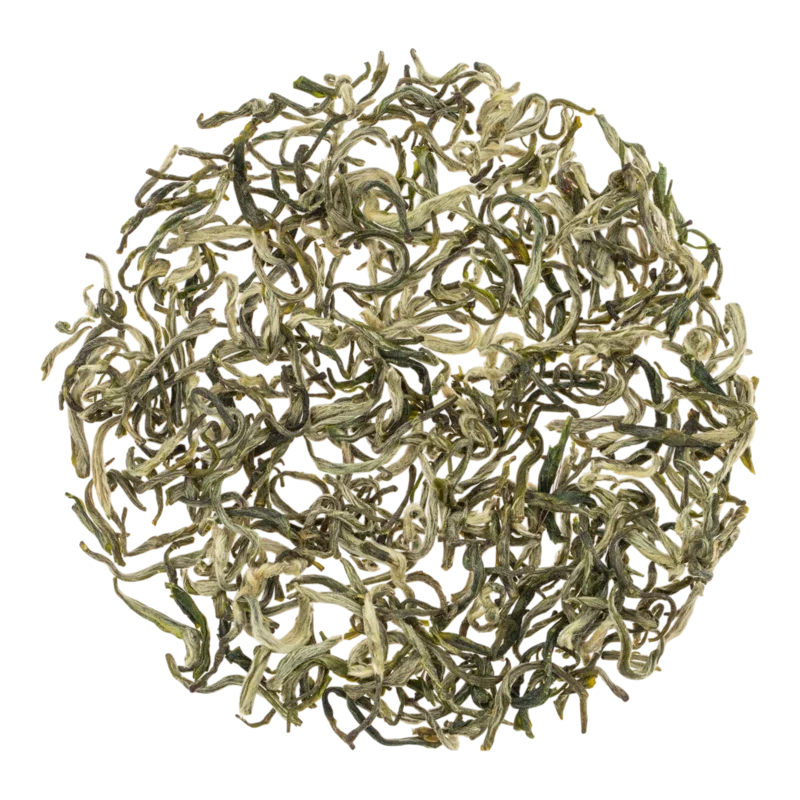
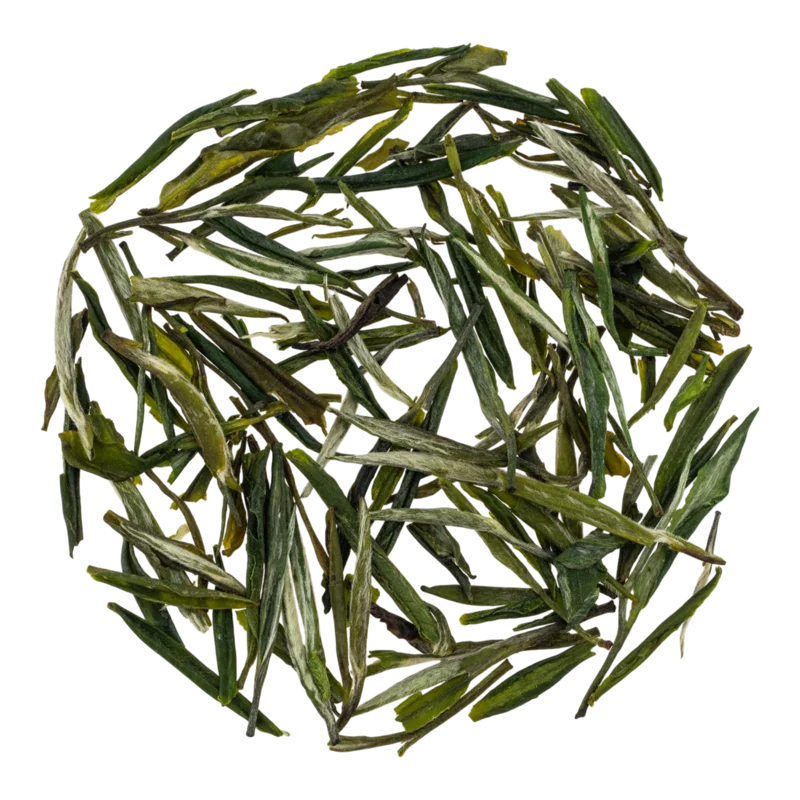
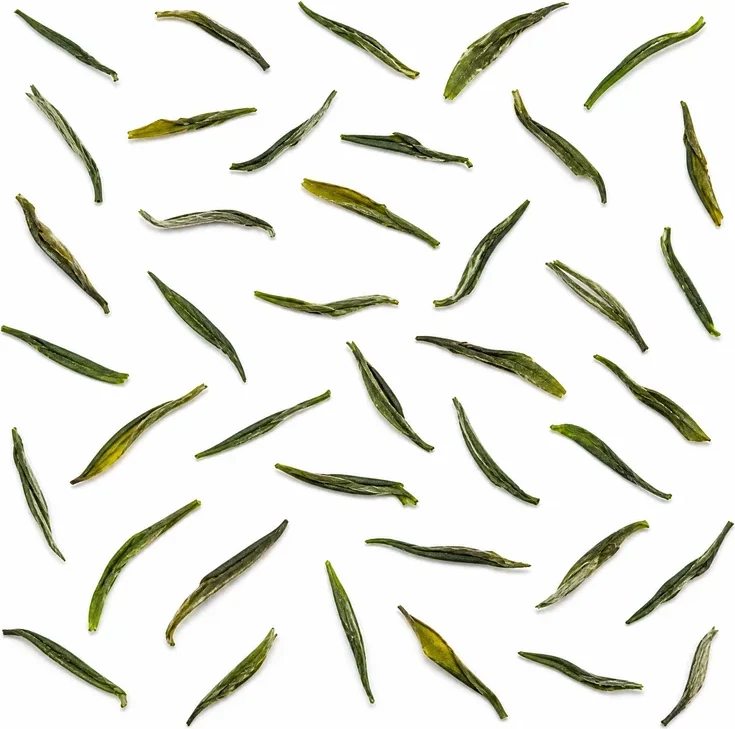
Dry Leaf Appearance: Two characteristic styles — flat straight (扁平挺直, biǎnpíng tǐngzhí), resembling Longjing, and spiral-shaped (蜷曲似螺, quánqū sì luó), resembling Biluochun. Dry leaf color — dark green with subdued down (墨绿隐毫, mòlǜ yǐn háo). Leaf even, dense, without crumbs and stems.
Dry Leaf Aroma: Rich chestnut (栗香, lìxiāng) — signature feature, due to proximity of chestnut forests and specificity of wood firing. In the background — clean green freshness (清香, qīngxiāng).
Liquor Aroma: Intense chestnut aroma unfolds from the first seconds of brewing, gradually complemented by notes of roasted nuts, fresh greens, and light florality. Aroma is persistent, lasting until the final steeps.
Liquor Color: Clear, bright yellow-green (清澈黄亮, qīngchè huáng liàng).
Spent Leaves: Tender green, even, uniform leaflets, lively and fresh, unfolding in complete "bouquets" (嫩绿匀整、鲜活成朵).
Taste: Sweetness (甘, gān) is the leading characteristic — it is felt from the first sip and builds in the aftertaste. Liquor body is soft and full (醇厚, chúnhòu), without pronounced bitterness and astringency. Aftertaste is long and refreshing, with pronounced returning sweetness (回甘, huígān) and active salivation (生津, shēngjīn).
Alkaloids: Caffeine (~2–4% of dry mass), theobromine, theophylline — responsible for tonic action.
Amino Acids: Content in spring tea ≥ 3.0%, including L-theanine — key component responsible for sweetness, umami-like notes, and relaxing effect.
≥ 45% — 15 percentage points higher than national standard, ensuring dense, rich liquor body and resistance to multiple brewings.
Natural enrichment with zinc and selenium, due to local soil composition. Selenium participates in cellular antioxidant protection, zinc supports immune function.
Form the signature chestnut profile; "green" type aldehydes and alcohols predominate (pentenol, ethylenol), characteristic of high-mountain teas with high amino acid content.
Polyphenols: Content reaches ~28%, noticeably higher than the average indicator for green teas (~20%). Main group — catechins, including epigallocatechin-3-gallate (EGCG), possessing pronounced antioxidant activity.
Vitamins: Vitamin C (in fresh raw material), B vitamins, vitamin K.
High polyphenol content (28%) provides effective neutralization of free radicals. According to Chinese research, the effectiveness of antioxidant action of tea polyphenols can exceed the analogous indicator of vitamin E by 18 times.
Catechins contribute to lowering cholesterol levels in blood plasma and maintaining vascular elasticity.
Increased fluoride content in tea suppresses activity of cariogenic bacteria.
Combination of caffeine and L-theanine provides mental clarity and concentration without sharp excitement spikes.
Polyphenols stimulate metabolic processes and may contribute to body weight normalization with regular consumption.
Natural content of these microelements in tea supports immune function and participates in cellular antioxidant protection.
Moderate consumption after meals promotes comfortable digestion; however, drinking on empty stomach is not recommended — tannins may irritate gastric mucosa.
Antioxidants and microelements (selenium, zinc) participate in protecting skin from photoaging and oxidative stress.
This information is for general educational purposes and is not medical advice.
Do not brew with boiling water (above 90 °C) — high temperature destroys theanine and causes excessive astringency. Not recommended to drink on empty stomach due to possible gastric mucosa irritation by tannins. Fresh tea (新茶) should preferably be aged 7 days in a dark place for "fire removal" before first brewing.
Tea Amount: 3 g per 150 ml water (1:50 ratio).
Teaware: Glass cup (玻璃杯, bōlí bēi) — ideal for observing how buds stand vertically in water; white porcelain cup (白瓷杯, bái cí bēi) emphasizes liquor color; white porcelain gaiwan — for gongfu format.
Water Temperature: 85–90 °C for standard grades. For "Special" category (特级) tea from single buds, temperature is recommended to be reduced to 80 °C to avoid damaging tender raw material.
Classic flat green tea from Zhejiang. Common feature — flat leaf shape; difference — Longjing possesses a bean-chestnut profile with more pronounced "roastedness," while Xiangyuan Wu Ya gives a deeper chestnut tone with long sweetness, due to high-mountain terroir and selenium enrichment.
Spiral green tea from Jiangsu. The spiral style of Xiangyuan Wu Ya formally resembles Biluochun, however the taste profile differs substantially: Biluochun is dominated by fruity-floral notes (tea gardens neighbor fruit trees), Xiangyuan Wu Ya — chestnut depth and minerality.
Famous green tea from Henan Province, also from northern tea regions. Both teas are distinguished by elevated amino acid content, however Xinyang Maojian has more pronounced astringency and grassiness, while Xiangyuan Wu Ya is sweeter and softer.
"Fellow countryman" from the same southern Shaanxi region, also selenium-enriched. Similar climatic conditions, but Ziyang Maojian is a twisted needle tea with different aromatic profile, less pronounced chestnut character.
Price strongly depends on grade and season. Míngqián tea (明前茶, tea before Qingming) category "Xiangyuan Wu Ya" (highest grade) — 400–1,000 yuan per jin (500 g). Xiàngyuán Máojiān (象园毛尖, medium grade, before Guyu) — 200–400 yuan per jin. Xiàngyuán Chǎoqīng (象园炒青, mass tea from summer-autumn raw material) — significantly cheaper, distinguished by high price/quality ratio.
Price Factors: harvest season, raw material grade (single buds vs. bud + 2 leaves), hand work, certification presence (organic, geographical indication).
No reviews yet. Tell us what you think of this tea.
Rate this tea and share your impressions. We review each submission before publishing it.