Brewing
Gongfu brewing
- Water temperature
- 75 °C
- Tea amount
- 5 g
- Water volume
- 100 ml
- First steep
- 10 s
- Time added per infusion
- 5 s
- Infusions
- 3

Huángyún cuì zhú
Choose a brewing method. Start with the recommended quantities and time, then adjust to taste.
Brewing
Brewing
Taste
Tea encyclopedia
Category: Regional famous tea with protected origin (地理标志). Part of the Hànzhōng green tea system (汉中绿茶), which as a whole is recognized by the State Administration for Quality and Standardization as a product with geographical indication. Hanzhong tea is valued for the formula "three highs, two riches, one purity" (纬度高、海拔高、云雾几率高、富含锌硒、远离污染) — high latitude, high elevation, high cloudiness, richness in zinc and selenium, absence of pollution.
Category: Regional famous tea with protected origin (地理标志). Part of the Hànzhōng green tea system (汉中绿茶), which as a whole is recognized by the State Administration for Quality and Standardization as a product with geographical indication. Hanzhong tea is valued for the formula "three highs, two riches, one purity" (纬度高、海拔高、云雾几率高、富含锌硒、远离污染) — high latitude, high elevation, high cloudiness, richness in zinc and selenium, absence of pollution.
Coordinates: Approximately 32°20′–33°20′ N, 106°00′–107°30′ E (Hanzhong territory).
Origin: China, Shaanxi Province (陕西省, Shǎnxī shěng), Hànzhōng City (汉中市, Hànzhōng shì). Hànzhōng is located in the valley between the Qínlǐng Mountains (秦岭) to the north and the Dàbā Mountains (大巴山) to the south — in the so-called "Tianfu Hanzhong" (天府汉中), "Paradise Land of Hanzhong," which UNESCO included in the "Man and Biosphere" program (世界人与自然生物圈保护区). The main tea zones of the region are Xīxiāng (西乡), Nanzheng (南郑), Níngqiáng (宁强), Chenggu (城固) counties, as well as individual mountain areas of other counties.
Type: Green tea (non-oxidized). Belongs to the category of Shaanxi high-mountain green teas (陕西高山绿茶), combining elements of pan-firing (炒青) and oven-drying (烘青) technologies.
Cultural Significance: Hànzhōng is a land steeped in Three Kingdoms history (三国): it was here that Liu Bei founded the Shu-Han kingdom, and Zhuge Liang developed his stratagems. Tea is inseparably connected with this culture: "Zhang Qian Pai" (张骞牌) — one of the region's leading tea brands — is named after Hanzhong native Zhang Qian, the great traveler and founder of the Great Silk Road. Hanzhong tea is one of the key goods that the historical "Tea Horse Road" (茶马古道) carried from Shaanxi to the west and northwest.
History: Tea cultivation in the Hanzhong region has ancient roots. As early as the era of the ancient kingdoms of Bā (巴) and Shú (蜀), about three thousand years ago, the population of southern Shaanxi began growing and using tea. In the Hanyangling Mausoleum (汉阳陵, near Xi'an), tea leaf remains were discovered dating to around 141 BCE and recognized by the Institute of Physics of the Chinese Academy of Sciences as the world's oldest archaeologically confirmed tea. Lu Yu in "The Classic of Tea" (《茶经》, 8th century) included the Jinzhou district (金州, modern Ankang) and Hanzhong among the eight tea regions of the Tang Empire, the Shānnán tea region (山南茶区).
Name Breakdown: "Huangyun Cui Zhu" (黄云翠竹) translates as "Yellow clouds, emerald bamboo." 黄云 (Huángyún) — "yellow clouds": the image of Qinling mountain mists illuminated by dawn or sunset sun, creating a characteristic golden-yellow glow. 翠竹 (Cuì Zhú) — "emerald bamboo": a reference both to the bamboo groves typical of southern Shaanxi landscape and to the tea shoot form resembling a straight, elegant bamboo leaf. The name is simultaneously poetic and precise: it conveys both terroir (cloudy mountains) and leaf morphology (bamboo-like straightness) and the region's chromatics (green-golden palette).
Cultivar: Local population plantings (群体种, qúntǐzhǒng) — seed mixtures of lines adapted to the high-mountain terroir of Qinling through centuries of natural selection. Small-leaf form characteristic of northern Chinese tea regions: compact bush, small dense leaves with high amino acid content and relatively moderate polyphenol content. This proportion forms "high sweetness, low bitterness" (高甜低涩) — the calling card of Hanzhong tea.
Picking: Predominantly spring. Premium lots — before Qīngmíng (清明, early April); main harvest — before Gǔyǔ (谷雨, late April). Due to the more northern position and mountain climate, vegetation begins later than in southern provinces, ensuring longer amino acid accumulation in buds.
Pluck Standard: Bud with one to two upper leaves (一芽一叶 – 一芽二叶). For premium grade — predominantly "one bud — one leaf in initial opening" (一芽一叶初展).
Raw Material: Shoots must be fresh, intact, uniform in size, without mechanical damage and overheating. Visible down on buds is desirable.
Altitude: About 600–1200 m above sea level, main zone — around 800 m.
Climate: Transitional from subtropical to temperate, with pronounced mountain character. Average annual temperature — about 13.5°C. Annual precipitation — 800–1200 mm. Frequent fogs and cloudiness — natural shading that promotes L-theanine accumulation and reduces bitterness. Significant diurnal and seasonal temperature variations. Qinling protects from cold northern winds, creating a local "southern" microclimate in an otherwise northern province.
Soil: Mountain yellow and brown forest soils (黄棕壤, 山地黄壤) with acidic reaction (pH 4.5–6.0), high organic content and natural enrichment with microelements. Key feature — elevated selenium (硒, xī) and zinc (锌, xīn) content in southern Shaanxi soils, which is reflected in the tea's mineral composition. Good water permeability of mountain soils.
Hànzhōng is located in an intermountain valley (汉中盆地) between two powerful ranges: Qínlǐng (秦岭, up to 3767 m) to the north and Dàbā Mountains (大巴山) to the south. Plantations occupy slopes of the middle and upper parts of the ranges, in the zone of maximum cloudiness and fog. The landscape is mountainous, with dense broadleaf and mixed forests, bamboo groves, abundant watercourses.
Ecological plantation management. Distance from industrial zones and water conservation territory status (southern Shaanxi is a key zone of the "South-to-North Water Transfer Project," 南水北调中线工程) ensure ecosystem purity. Organic fertilizers and biological pest control methods are applied. Many plantations are located in UNESCO biosphere reserve zones.
Hand selection of young shoots according to grade standard. Quick delivery to factory.
Fresh shoots are spread in a thin layer (3–5 cm) in a cool, ventilated room for 4–6 hours. Partial moisture evaporation, beginning of aromatic precursor formation, increased free amino acid content through protein breakdown.
Pan-firing in a heated wok (锅炒杀青) at high temperature. Rapid inactivation of oxidase enzymes, preservation of green color. Formation of chestnut aroma base (栗香). Principle: "high temperature, evenness, no red stems."
Light rolling for partial cell wall destruction and juice release to leaf surface. Ensures full extraction during brewing.
Key stage for Huangyun Cui Zhu: the shoot is given its characteristic straight, slightly flat, "bamboo-like" form (挺直如竹). Shaping is performed by light pressing and straightening in a warm wok, forming an elegant straight silhouette that gave the tea part of its name (翠竹).
Bringing to stable moisture content (≤ 6%) at moderate temperature. Setting of form, aroma and color. Combination of final pan-firing and oven-drying gives depth to the chestnut note.
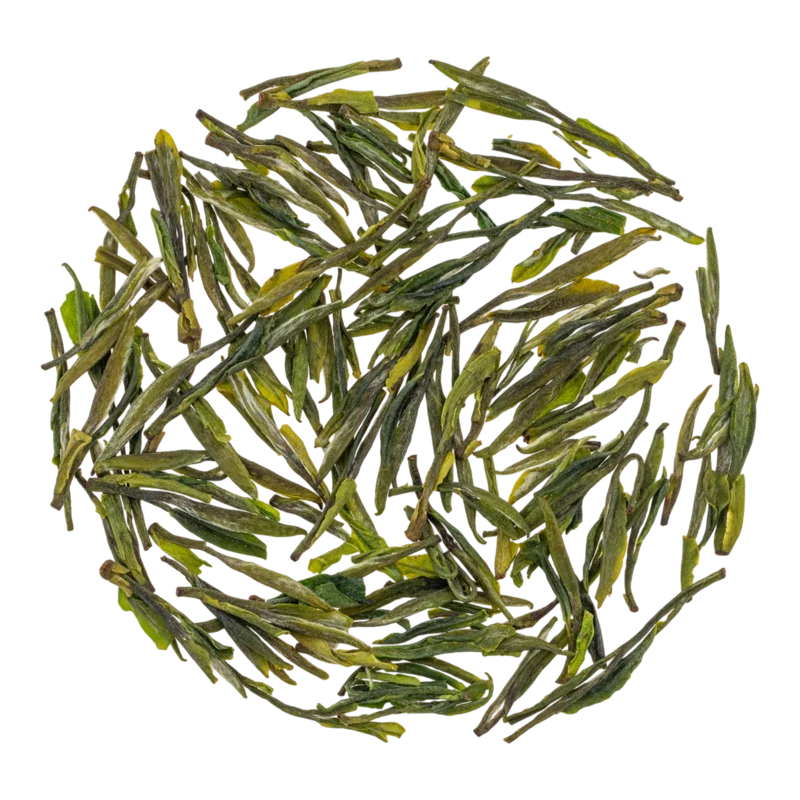
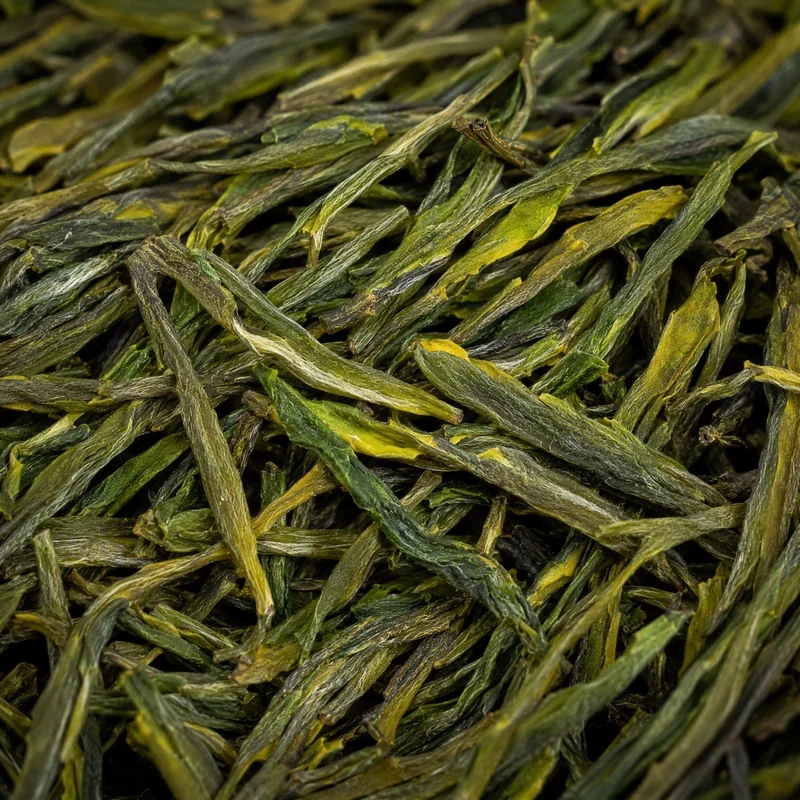
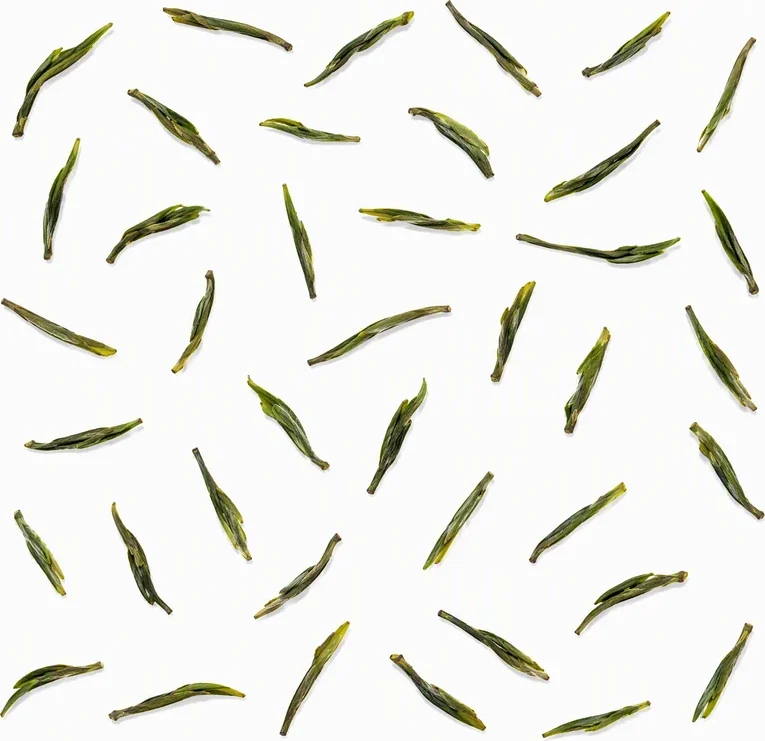
Dry Leaf Appearance: Shoots are straight, elegant, slightly flattened, resembling miniature bamboo leaves (秀美挺直). Color — rich green with emerald tint, with visible fine down on buds.
Dry Leaf Aroma: Pronounced chestnut (栗香), with light orchid note (兰花香, lánhuā xiāng). Aroma is persistent, deep, "long-lasting" (香浓,韵味深长).
Liquor Aroma: Chestnut-nutty base, complemented by soft floral overtones. Clean, transparent, without foreign impurities.
Liquor Color: Yellow-green to bright green, transparent, with light jade glow.
Spent Leaves: Leaves are even, intact, tender green, resilient. Well-opened, maintaining straight form.
Taste: Fresh, "brisk" (鲜爽, xiānshuǎng), with sweet base and minimal bitterness. Body — medium, harmonious. Pronounced "huigan" (回甘) — prolonged returning sweetness felt in the throat after each sip. Hanzhong tea formula — "高香、高鲜、高甜、低苦、低涩" (high aroma, high freshness, high sweetness, low bitterness, low astringency).
Alkaloids: Caffeine — about 2.0–3.0% of dry mass. Theobromine and theophylline — in trace amounts.
Amino Acids: Elevated content — characteristic feature of Hanzhong teas. L-theanine (L-茶氨酸) — main carrier of sweetness and umami. High concentration is due to three factors: northern latitude (slowed vegetation), mountain elevation (cool nights), cloudiness (natural shading). Amino acid to polyphenol ratio is above average, forming dominance of sweetness over bitterness.
Linalool, cis-3-hexenol, β-ionone, geraniol, phenylacetaldehyde. Form the characteristic chestnut-orchid profile.
Minerals: Potassium, magnesium, manganese, zinc, phosphorus, fluorine. Unique feature — natural selenium enrichment (硒): southern Shaanxi soils are part of China's "selenium belt," and tea from this region contains significant amounts of organic selenium, valued for antioxidant and immunomodulating properties.
Polyphenols: Moderate content (12–18% of dry mass), which is lower than southern Chinese green teas based on large-leaf cultivars. This is due to the small-leaf cultivar form and cool mountain climate. Main ones — catechins (EGCG, EGC, ECG, EC). Reduced polyphenol content is the reason for mildness and "uncorrected" sweetness of taste.
Vitamins: Vitamin C (well preserved during wok firing), B-group vitamins (B₁, B₂, B₃), β-carotene, folic acid.
Catechins and organic selenium jointly provide powerful free radical neutralization, contributing to cellular aging deceleration.
Synergy of caffeine and L-theanine gives balanced stimulating action — increased concentration and cognitive clarity without anxiety.
Organic selenium participates in glutathione peroxidase function — a key enzyme of the body's antioxidant defense system. Supports thyroid gland and immune system function.
Polyphenols stimulate peristalsis, facilitate food absorption, support healthy intestinal microflora.
Regular green tea consumption is associated with LDL reduction and maintenance of vascular elasticity.
Complex of zinc, selenium, vitamins C and B-group and polyphenols provides general strengthening effect.
Fluorine and catechins suppress growth of cariogenic bacteria.
Tea Amount: 3 g per 150 ml (gaiwan, flash steeping method); 2–3 g per 200 ml (glass cup, infusion method).
Teaware: Glass cup (玻璃杯) — ideal choice for observing straight, "bamboo-like" shoots floating in jade liquor. Porcelain gàiwǎn (盖碗) — for more precise extraction control and multiple brewings.
Water Temperature: 80–85°C. Hanzhong green teas with high amino acid content are better revealed at moderate temperature; too hot water suppresses sweetness and enhances bitterness.
Container: Airtight, light-proof — aluminum foil, tin or ceramic jar with tight lid.
Enemies: Light, moisture, foreign odors, oxygen, high temperature.
Shelf Life: For maximum flavor development — within 6–12 months after production. With professional refrigerated storage — up to 18 months.
Temperature: Optimally — 0–5°C (refrigerator). Acceptable storage at room temperature in cool dark place for short term (up to 2 months).
Price Category: Middle segment among Hanzhong green teas. Early spring first grade costs significantly more than summer; price also depends on specific producer and certification.
authentic Huangyun Cui Zhu is distinguished by straight, elegant shoots of "bamboo-like" form. Distorted, broken or excessively small form — sign of substitution.
genuine chestnut aroma with orchid undertone — clean, deep, persistent. Artificial flavoring gives sharp, quickly disappearing smell.
should be transparent, yellow-green. Cloudiness or dullness — sign of old or fake tea.
suspiciously low price — grounds for doubt.
No reviews yet. Tell us what you think of this tea.
Rate this tea and share your impressions. We review each submission before publishing it.