Classification and Origin
Category: Categorical / overview article covering the entire diversity of green teas from Yunnan Province.
Coordinates: Yunnan Province is located between 21° and 29° North latitude, 97° and 106° East longitude. Tea plantations are concentrated predominantly south of 25° North latitude.
Origin: China (中国, Zhōngguó), Yúnnán Province (云南省, Yúnnán Shěng). Main tea regions: Líncāng (临沧, Líncāng), Bǎoshān (保山, Bǎoshān), Pu'er / Sīmáo (普洱/思茅, Pǔ'ěr/Sīmáo), Déhóng (德宏, Déhóng), Xīshuāngbǎnnà (西双版纳, Xīshuāngbǎnnà), Dàlǐ (大理, Dàlǐ), Kūnmíng (昆明, Kūnmíng), Zhāotōng (昭通, Zhāotōng).
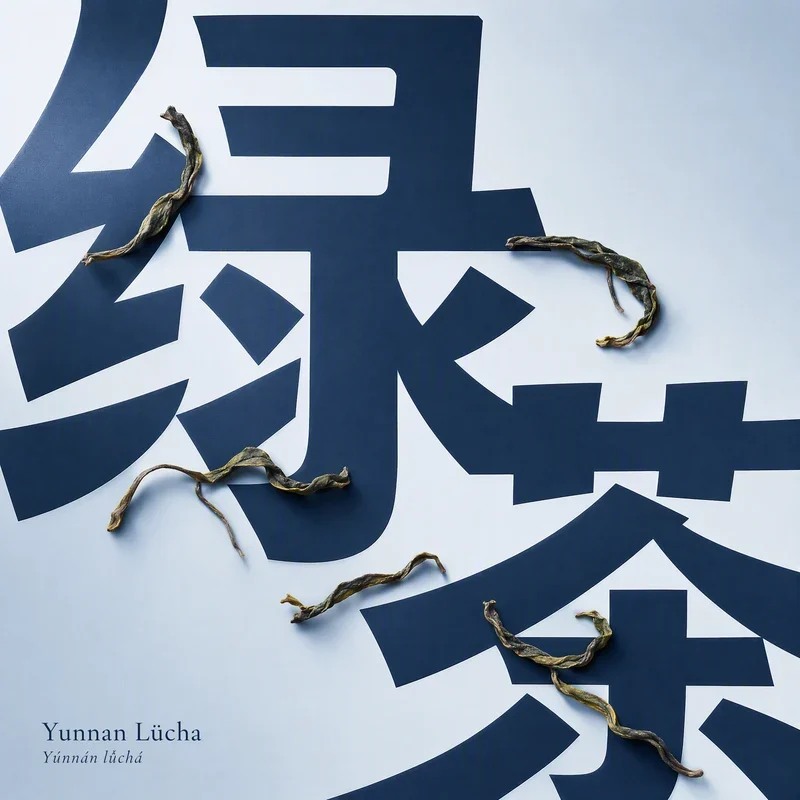
Type: Green tea (绿茶, lǜchá), non-oxidized. Depending on the method of fixation and drying, it is subdivided into four subtypes: shaiqing (晒青, shàiqīng — sun-dried), hongqing (烘青, hōngqīng — hot air-dried), chaoqing (炒青, chǎoqīng — pan-fired), and zhengqing (蒸青, zhēngqīng — steam-fixed).
Botany and Raw Material
Main industrial material — the same used for pu-erh and Dian Hong. Produces powerful, extractive, "bodied" green tea with light bitterness.
Yunkang 10 (云抗10号, Yúnkàng 10 Hào), Yunkang 47 (云抗47号, Yúnkàng 47 Hào — the first highly aromatic cultivar that brought floral notes to the Dian Lü palette), Yuncha 1 (云茶1号, Yúnchá 1 Hào), Foxiang 2 and 3 (佛香2号/3号, Fóxiāng 2/3 Hào — hybrid of Yunnan large-leaf and Fuding Dabaicha).
Used for historical named teas — Kunming "Shili Xiang" (十里香, Shílǐ Xiāng), Yíliáng Bǎohóng (宝洪, Bǎohóng) and others.
Cultivar: Yunnan is the only province in China where both large-leaf (Camellia sinensis var. assamica) and small-leaf (C. sinensis var. sinensis) varieties of tea tree are used on an industrial scale. For the production of Dian Lü, the following are used:
Picking: Spring — March–May (premium grades); summer-autumn — June–October (mass grades). Due to the warm climate, up to 25–26 pickings per year are possible.
Pluck Standard: Bud with one to two upper leaves for named teas; more mature raw material is acceptable for mass shaiqing and hongqing grades.
Raw Material: Young, uniform, without mechanical damage. For some teas (bamboo tea, tea from ancient trees), large-leaf raw material with pronounced "wild" character is acceptable.
Terroir
Altitude: From 500 to 2,200 m above sea level. Tea grown above 1,200 m generally possesses more delicate aroma and pronounced sweetness.
Soil: Diverse — red soils (红壤, hóng rǎng), yellow soils (黄壤, huáng rǎng), laterites. Rich in organic matter and minerals, especially in zones of old tropical forests.
Yunnan is a mountainous province with enormous landscape diversity: from tropical lowlands of Xishuangbanna (about 500 m) to cool highlands of Dali and Lincang (1,500–2,200 m). Climate — predominantly subtropical monsoon with clear division into rainy season (May–October) and dry season (November–April). Average annual temperature — 12–23 °C depending on altitude. Daily temperature fluctuations are significant (up to 15 °C), which promotes accumulation of aromatic substances and amino acids.
Yunnan concentrates the world's largest number of ancient tea trees hundreds and thousands of years old. Many plantations are located in mixed forest ecosystems, where tea trees grow alongside camphor trees, bamboo and ferns — a natural environment providing biological pest control.
Organoleptic Profile
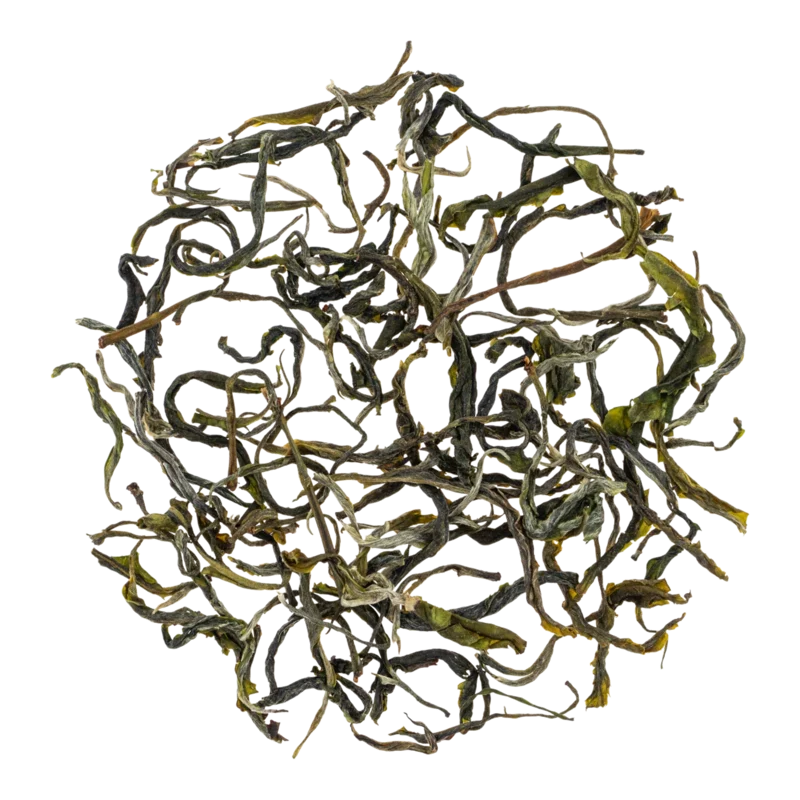
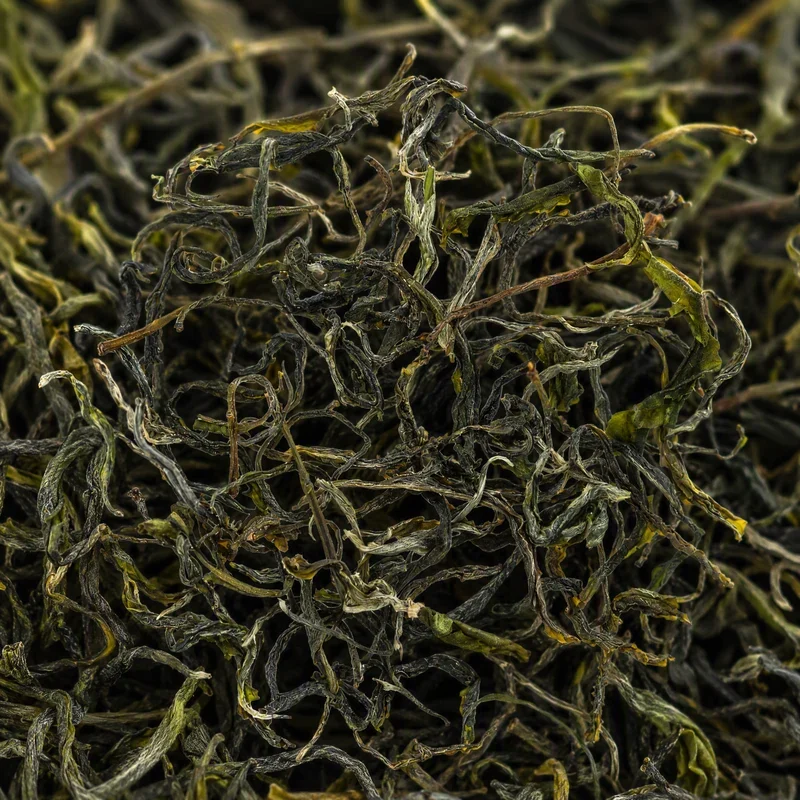
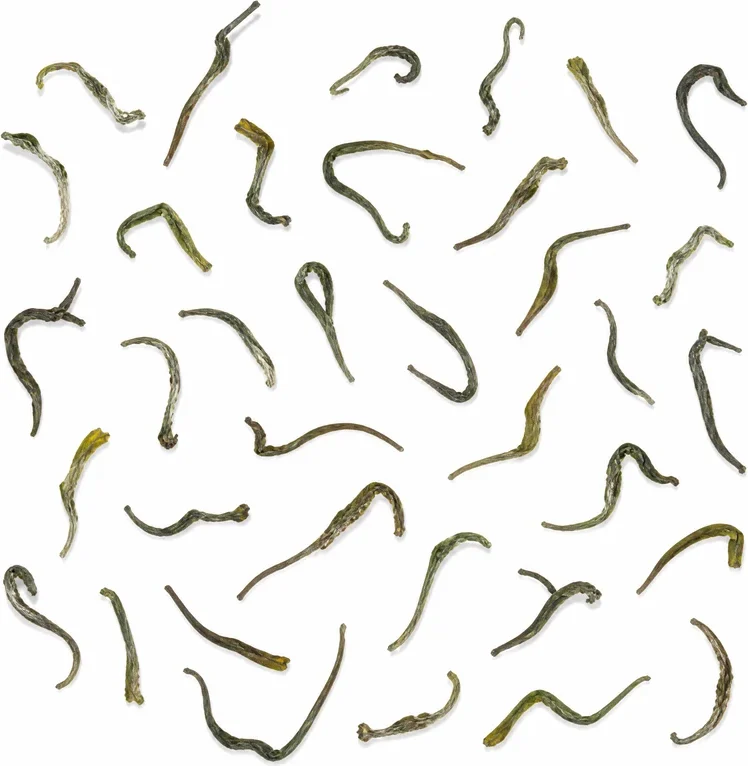
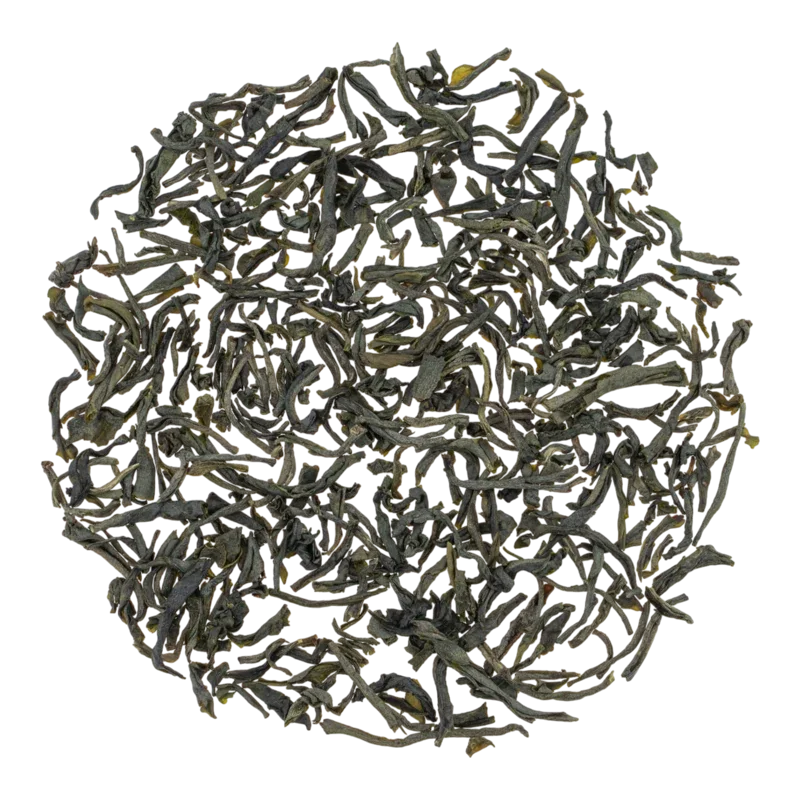
Dry Leaf Appearance: From thin twisted "spirals" and "needles" to large, flat "tongues" and plump shoots with abundant silver down. Color — from light green (hongqing) to dark green with oily sheen (chaoqing). Characteristic feature of large-leaf varieties — powerful, "fleshy" shoots, noticeably larger than green teas of the Yangtze valley.
Dry Leaf Aroma: Fresh, with wide palette: chestnut and bean notes (chaoqing), floral (hongqing, especially from Yunkang 47 cultivar), grassy-green with smoky undertone (shaiqing).
Liquor Aroma: Bright, voluminous, with predominance of chestnut and roasted nut in roasted varieties; clean and floral in hongqing; with note of fresh-cut grass and "solar warmth" in shaiqing.
Liquor Color: From light green to yellow-green (hongqing, chaoqing); greenish-yellow, sometimes slightly cloudy (fresh shaiqing — clarifies with age).
Spent Leaves: Whole, elastic, large leaves and buds — significantly larger than Zhejiang or Anhui green teas. Color — from fresh green to olive.
Taste: Main difference from traditional green teas — significantly denser body and pronounced extractiveness. Large-leaf varieties produce powerful, "bodied" liquor with light bitterness quickly transitioning to sweet returning sweetness (huí gān). Small-leaf teas are more tender and delicate, closer to classic green profile. Resistance to multiple infusions — above average.
Chemical Composition
Alkaloids: Caffeine — 3.0–3.6%. Theobromine and theophylline — in trace amounts.
Amino Acids: 2.5–4.0% depending on variety and growing altitude. L-theanine dominates, providing balance between polyphenol bitterness and sweetness.
45–47% — very high indicator explaining liquor density and "body".
Essential Oils: Diverse and depend on cultivar and fixation method. Yunkang 47 cultivar contains increased amounts of linalool and geraniol, providing floral aroma.
Minerals: Potassium, magnesium, fluorine, zinc, manganese.
Polyphenols: 28–32% in large-leaf varieties — one of the highest values among green teas worldwide. Main components — EGCG, ECG, EGC. High polyphenol content explains pronounced taste structure and antioxidant potential. In small-leaf varieties — 20–25%.
Vitamins: C (in fresh raw material), B group, E.
Health Notes
High catechin content (up to 32%) makes Dian Lü one of the most antioxidant-rich green teas.
Caffeine (3.0–3.6%) combined with L-theanine provides sustained alertness; in heat, Dian Lü excellently quenches thirst and relieves overheating — traditional summer drink of Yunnan people.
Polyphenols and amino acids stimulate peristalsis, facilitate digestion of fatty foods.
Catechins and amino acids promote reduction of triglyceride and LDL cholesterol levels; potential atherosclerosis prevention.
EGCG inhibits fat and glucose absorption, contributing to body weight control and blood sugar levels.
Polyphenolic derivatives and vitamin C increase general body resistance; prevention of seasonal respiratory infections.
L-theanine improves concentration and emotional balance, softening the stimulating effect of caffeine.
Brewing
Tea Amount: 3–5 g per 150–200 ml (European method); 5–7 g per 100–120 ml (gongfu method).
Teaware: Gàiwǎn (盖碗, gàiwǎn) — universal option; glass teapot or cup — for observing large shoot opening; for shaiqing even clay teapot is acceptable (coarser raw material is not as sensitive to aroma absorption).
Water Temperature: 80–90 °C for large-leaf chaoqing and hongqing; 75–80 °C for delicate small-leaf varieties; 85–90 °C for shaiqing (coarser raw material opens better at slightly higher temperature).
Comparison
General, "generic" name for all Yunnan green teas, most often designating mass hongqing or chaoqing varieties from large-leaf raw material. Character — rich, "bodied", with chestnut aroma and light bitterness.
Historical green tea from Yiliang County near Kunming, also known as "Shili Xiang" — "Fragrance for Ten Li". Small-leaf chaoqing with exceptionally high, persistent floral aroma. Produced from local small-leaf cultivar.
"White Down of Nannuo" — high-mountain green tea from the famous tea region Nannoshan (南糯山) in Xishuangbanna. Abundant silver down, tender sweet taste, large buds. Hongqing-chaoqing combined type.
"White Down of Sea of Clouds" — high-mountain green tea from Jingmai or Simao region with abundant tips and delicate sweet-floral profile.
"Cloud Needles from Mojiang" — green tea from Hani-Yi Autonomous County Mojiang in Pu'er Prefecture. Originally produced by zhengqing technology (steam fixation), since 1958 — chaoqing. Thin, straight "needles" with high aroma.
"Snow Green of Cangshan Mountain" — green tea from Cangshan mountain range (3–4 thousand m), near Dali city. Delicate, with clean high-mountain aroma.
Historical tea from Gān Tóng Temple (感通寺) at the foot of Cangshan. One of the "three great historical teas of Yunnan" alongside pu-erh and Taihua Cha. In records of Qīng literatus Yú Huái (余怀, Yú Huái) — "sweet, aromatic, tender-white — best of Yunnan teas".
Unique Yunnan steam-fixed green tea with special enzymatic profile, invented in 1986–1987. Solves the problem of large-leaf raw material bitterness while preserving freshness. In the 1990s was the most popular household tea of the province.
Green tea from Cuihua mountain region in northern Yunnan, near the border with Sichuan. Small-leaf, with clean fresh aroma.
"Fragrant Tea in Bamboo Tube" — not a separate variety, but a unique processing method practiced by Dai and Hani ethnic groups: withered tea raw material is stuffed into fresh bamboo tubes and heated over coals. Tea acquires characteristic roasted bamboo aroma.
Price and Authenticity
Price Category: Overall, Dian Lü is one of the most affordable green teas in China. Mass hongqing and chaoqing varieties — 50–150 yuan per jin. Named teas (Baohong Cha, Nannuo Baihao, Moxiang Yunzhen) — 200–500 yuan. Rare teas from ancient trees (古树滇绿, gǔshù Diān Lǜ) can reach 1,000–3,000 yuan and more per jin, especially from famous mountains like Jǐngmài (景迈, Jǐngmài) or Bānzhāng (班章, Bānzhāng).
Price Factors: Raw material type (large-leaf vs. small-leaf), tree age, growing altitude, processing method, organic certification.