Classification and Origin
Category: High-mountain Taiwanese oolongs (高山茶, Gāo Shān Chá). Sub-location within the Lishan region.
Coordinates: ~24°09' N, ~121°15' E. Altitude 1800–2200 m.
Origin: Taiwan (台灣), Nántóu County (南投縣, Nántóu Xiàn), Líshān mountain area (梨山, Lí Shān), specifically — Cuì Luán district (翠巒) on the northern slopes.
Type: Oolong (lightly oxidized, 10–25% oxidation). Without roasting or with minimal roasting.
History and Culture
Cultural Significance: Cui Luan is a name that Taiwanese tea connoisseurs pronounce alongside Fushoushan and Da Yu Ling. This is an "insider's" tea: less known to the general public than Alishan, but valued by collectors for its unique micro-terroir.
History: Like other Lishan teas, Cui Luan began to be developed in the 1980s, when farmers pushed ever higher into the mountains in search of ideal terroir. The Cui Luan area attracted attention due to the northern exposure of its slopes: diffused lighting and lower temperatures create conditions where leaves grow more slowly and accumulate more amino acids than on southern slopes at the same altitude.
Botany and Raw Material
Qīng Xīn Oolong (青心烏龍, Qīng Xīn Wūlóng) — "Green Heart Oolong". At this altitude reveals maximum "high-mountain" potential: the most delicate leaves with record L-theanine content.
Jīn Xuān (金萱, Jīn Xuān) and Cuì Yù (翠玉, Cuì Yù) — less common, but present.
Spring (春茶, April–May) — most valuable. Winter (冬茶, October–November) — also prestigious. Between spring and winter harvest — 5–6 months of bush "rest" in the cold.
At altitudes of 1800–2200 m, bushes "sleep" for 3–4 months in winter (sometimes under snow). After awakening, the first spring harvest yields leaves of incredible concentration — all the energy of winter dormancy compressed into a few young shoots.
Pluck Standard: Bud + 2–3 top leaves. Only hand-picking — steep slopes exclude mechanization.
Terroir
Altitude: 1800–2200 m — higher than most Alishan teas (1000–1600 m), and comparable to Fushoushan (~2600 m) and Huagang (~2300 m).
Climate: Cool mountain climate. Average annual temperature 14–16°C. Daily temperature variations 10–15°C. Humidity 80–90%. Mists — practically daily, especially in morning and evening. Snow possible in winter.
Soil: Mountain soils with high organic matter and mineral content. Good natural drainage on steep slopes.
Key distinguishing feature of Cui Luan from other Lishan sub-locations. Northern slopes receive less direct sunlight → even slower growth → even higher amino acid content → even sweeter and more delicate tea. This "northern coolness" forms the characteristic "crystalline" character of Cui Luan.
Area of land suitable for tea is extremely small. Access to some plantations — only by mountain trails. Production — limited.
Topography: Northern slopes of the Lishan mountain range. Steep, often terraced plantations on narrow strips of land between rocks.
Organoleptic Profile
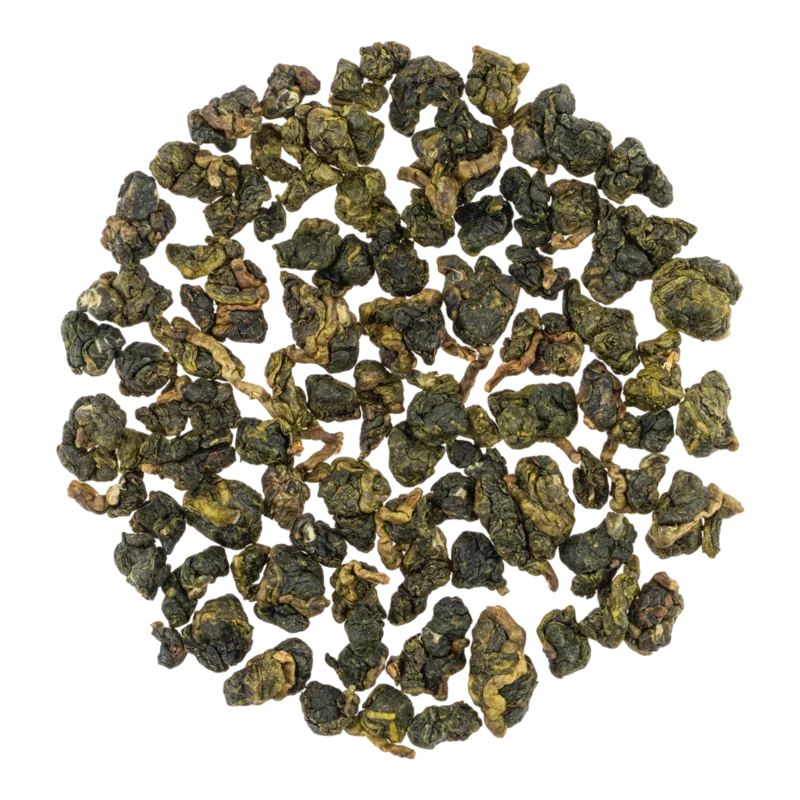
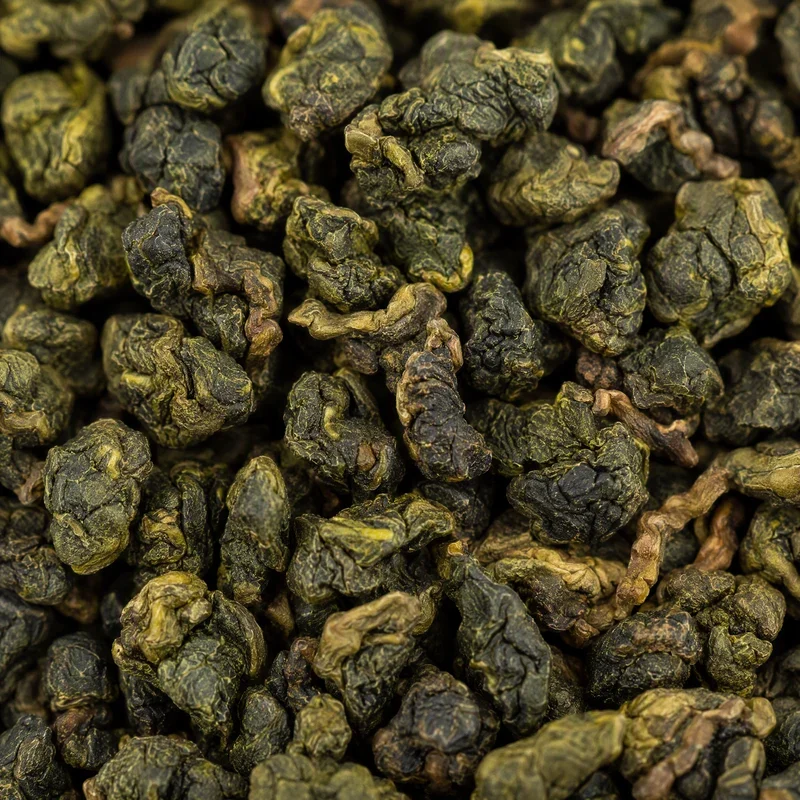
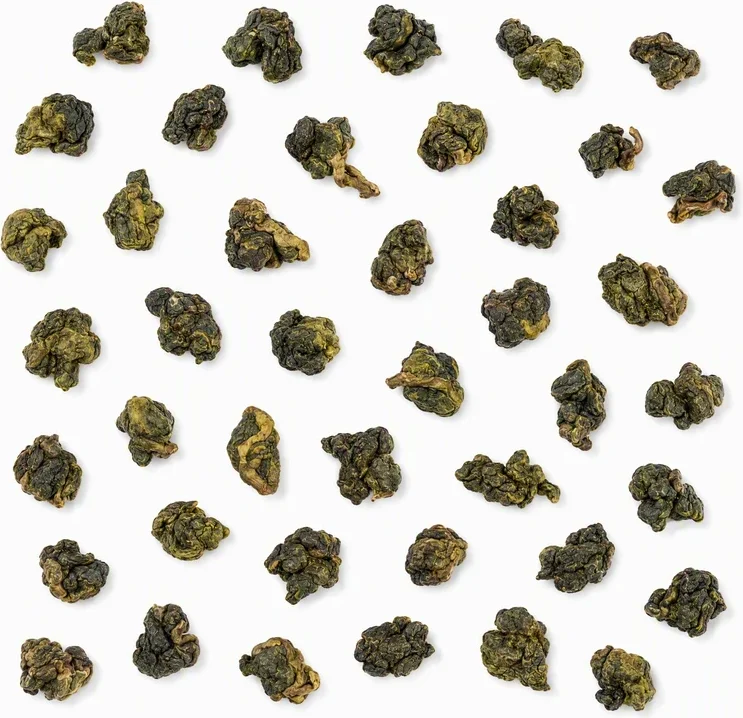
Dry Leaf Appearance: Tightly rolled semi-spheres, from emerald-green to dark green, with luster. Larger than average — high-mountain leaves are more fleshy. Tips with white down.
Dry Leaf Aroma: Exceptionally fresh, "cool" — like mountain air at dawn. Orchid, gardenia, lily of the valley. Creamy, fruity (pear, peach, lychee) and grassy nuances. Characteristic "coniferous" note — light hint of mountain pine, distinguishing Cui Luan from other Lishan teas.
Liquor Aroma: Rich, floral, sweetish. Cream, fruits, honey. Persistent and "alive" — aroma lingers on gaiwan lid for minutes.
Liquor Color: Light yellow, golden-green with barely perceptible pearlescent sheen. Transparent, clear.
Spent Leaves: Whole, large, elastic leaves of emerald-green color. Fleshy — sign of high-mountain raw material.
Taste: "Crystalline" — the main word for Cui Luan. Even more delicate and "transparent" than standard Lishan. Minimal astringency, pronounced natural sweetness. Floral notes (orchid, gardenia), creamy, fruity (pear, melon, lychee). Light acidity. Aftertaste — long, refreshing, with returning sweetness (回甘, huígān). Texture — silky, "airy".
Chemical Composition
Alkaloids: Moderate caffeine (~20–25 mg/g). Slightly below average.
Amino Acids: Record high L-theanine content — one of the most "amino acid-rich" Taiwanese oolongs. Basis of sweetness, umami and relaxing effect.
Essential Oils: Linalool, nerol, geraniol (floral notes); α-pinene (coniferous "mountain" note — characteristic of northern slopes). High concentration of essential oils.
Polyphenols: Content lower than in low-altitude oolongs — cold and northern exposure slow synthesis. Minimal astringency.
Vitamins: C (elevated), B group, E. Minerals: Potassium, fluorine, magnesium, manganese.
Health Notes
Record L-theanine content — pronounced calming without drowsiness.
Caffeine + L-theanine.
Catechins + elevated vitamin C.
"Cool" character.
Very low tannin content.
L-theanine + rich aroma.
Brewing
80–88°C. Boiling water absolutely forbidden — will destroy delicate notes. For spring Cui Luan of highest grade — 80–83°C.
5 g per 500 ml, 8–10 hours in refrigerator. Excellent result — "crystalline" purity fully revealed.
Tea Amount: 5–7 g per 150 ml.
Teaware: Porcelain gaiwan — ideal. Thin walls don't "steal" heat and allow appreciation of subtle aroma. Glass teapot — for observing leaf unfurling.