Classification and Origin
Category: National Geographical Indication Product (国家地理标志产品, 2010). In 2020 — inclusion in the list of mutually recognized China-EU geographical indications. Gold award at China Green Tea Forum (2008). "Four highs and four perfections" (四高四绝, sì gāo sì jué) — official quality formula. Cultivar "Huangjin 1" (黄金1号) — national superior variety (国家优良品种).
Coordinates: 109°12′—109°33′ East longitude, 28°24′—28°36′ North latitude.
Origin: China, Húnán Province (湖南, Húnán), Xiāngxī Tujia and Miáo Autonomous Prefecture (湘西土家族苗族自治州), Bǎojìng County (保靖县, Bǎojìng Xiàn). GI zone — entire county. Terroir core: Huluzhen Township (葫芦镇), Huangjincun Village (黄金村, "Golden Village") — historical birthplace of the tea, location of discovery of 2,057 ancient trees; Lüdongshanzhen Township (吕洞山镇). By 2022 — 155,000 mu (10,333 hectares), total value — 23.16 billion yuan.
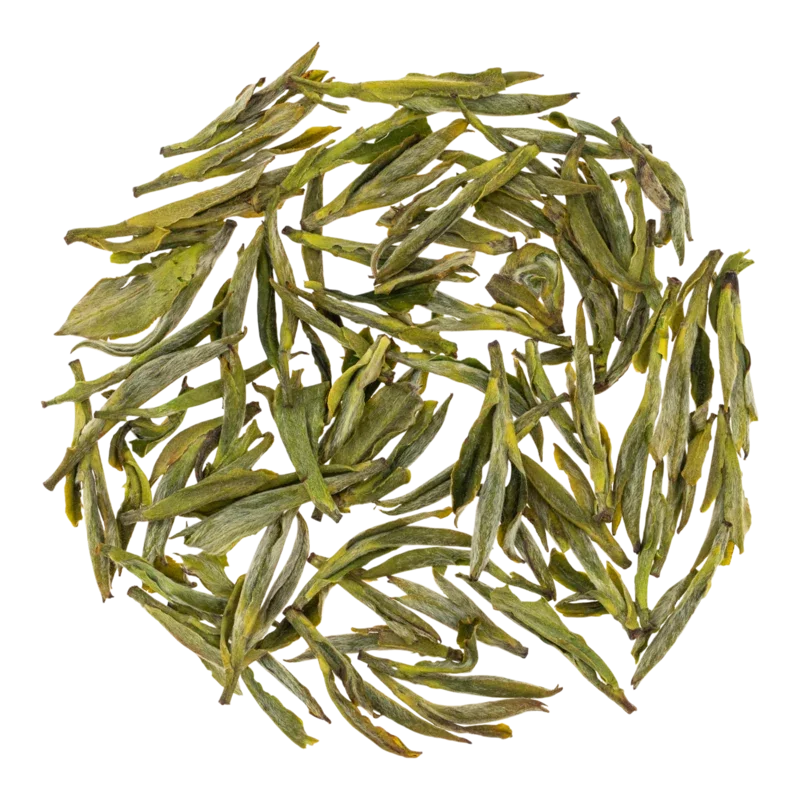
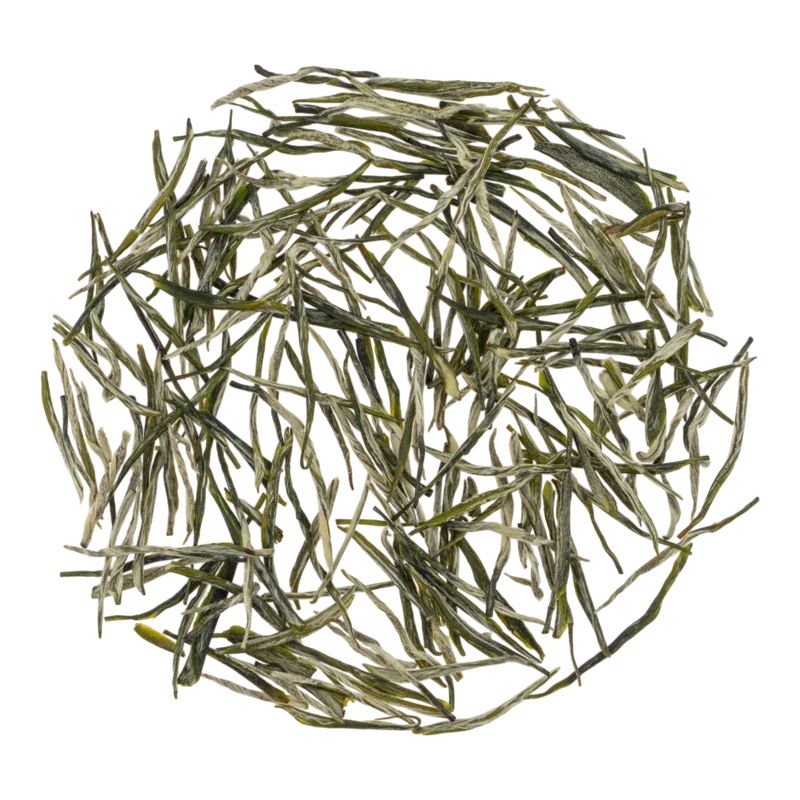
Type: Green tea (绿茶) (non-oxidized). By shape — needle-like (针芽状, for premium grade) and eyebrow-shaped (眉形, for first grade). By technology — pan-fired with charcoal drying.
History and Culture
Cultural Significance: Baojing Huang Jin Cha — tea of the Miáo people (苗族, Miáozú), one of the most ancient peoples of southwestern China. The legend of healing inspector Lu Jie — not merely a beautiful story, but a symbol of intercultural dialogue: Miao wisdom (knowledge of tea's healing properties) saved the lives of Han officials, and in gratitude the tea received its name and gold. 2,057 ancient trees (7 gardens from Ming and Qing eras, oldest — 417 years) — a living open-air museum, hence the nickname "可以喝的文物" — "tea that can be drunk like a museum artifact".
History: Legend of 1539 (明嘉靖十八年): Governor-General of Hu and Guang provinces Lù Jié (陆杰, 都御史), conducting an inspection, ventured deep into the Xiangxi mountains. More than one hundred people from his retinue fell ill with "mountain fever" (瘴气, zhàngqì — malaria or similar tropical diseases). A Miao elderly woman from a mountain village brewed leaves from a century-old tea tree and gave the sick to drink — all were healed. The astonished Lu Jie bestowed upon the elderly woman a gold ingot, sent the tea to court as tribute (贡品), and named the village "Golden" (黄金村). Thus was born the formula "一两黄金一两茶" — "one liang of gold for one liang of tea".
Botany and Raw Material
Full buds (≥90%). Thin, dense, downy. Chestnut aroma. Amino acids ≥6%.
One bud with one leaf (≥80%). Water extract ≥45%.
One bud with two leaves. Endurance ≥4 infusions.
Cultivar: Foundation — Bǎojìng Huangjincha Quntichong (保靖黄金茶群体种) — indigenous small-leaf variety Camellia sinensis var. sinensis of sexual reproduction. High resistance to adverse conditions. Clonal cultivars:
Picking: Spring. Three grades:
Terroir
Altitude: 300–1,200 meters above sea level. Core — 500–800 m a.s.l.
Climate: Average annual temperature — 16.1°C, annual precipitation — 1,400 mm, average annual number of foggy days — >180. Daily temperature variations — >10°C. Diffused light stimulates record accumulation of amino acids.
Soil: Red-yellow soils (红黄壤), pH 4.5–5.5. Organic content — >2.0%. Naturally enriched with selenium (0.82 mg/kg) and zinc. Forest coverage — 70.27%. Negative air ion concentration — 13,000/cm³. County certified as "China's Natural Oxygen Bar" (中国天然氧吧).
Center of Wǔlíng Mountain range (武陵山脉腹地) — the same range as Guzhang Mao Jian, but different county.
Amino acids (7.47%), polyphenols (20%), water extract (≈50%), chlorophyll (50%+ above normal) — all four indicators significantly exceed averages.
Production
6–8 hours — extended, for deep development of amino acid precursors.
At 130°C, with tossing and shaking (抛抖结合).
Light, 4–8 minutes.
At 100°C.
At 60°C over charcoal. Moisture content — ≤7%.
Original "rolled" shaping (独创卷曲型工艺塑形) — not standard straight or flat, but spiral, emphasizing the tenderness and downiness of shoots.
Organoleptic Profile
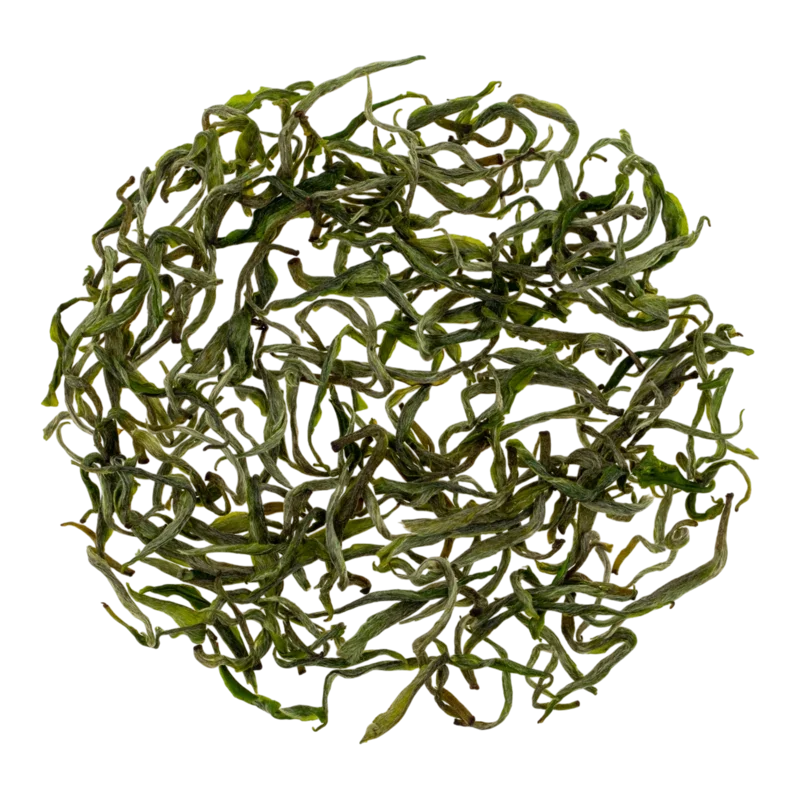
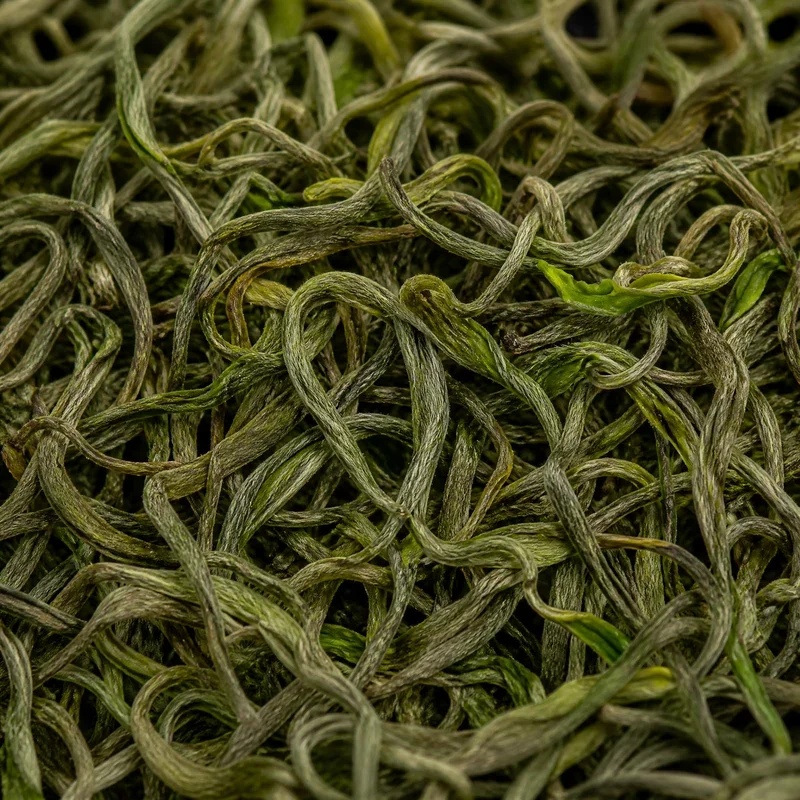
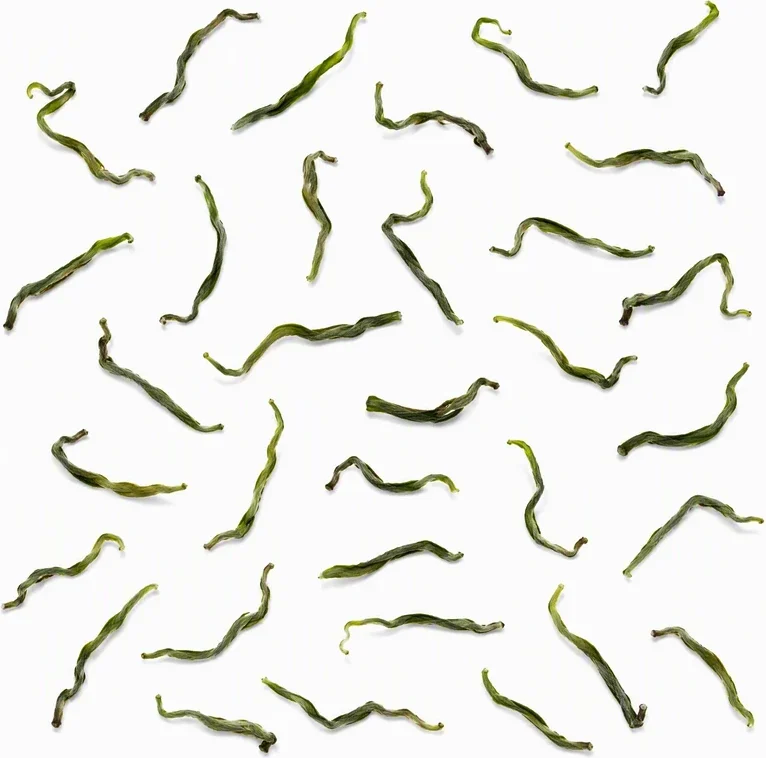
Dry Leaf Appearance: Thin, dense, slightly curved shoots (条细匀紧、翠绿稍弯), covered with silvery down (显毫). Color — bright emerald green.
Dry Leaf Aroma: Pure (清香) — main note. Tender chestnut (嫩栗香) — in spring tea. Chestnut (栗香) — in premium grade.
Liquor Aroma: Persistent, chestnut-fresh.
Liquor Color: Tender green, bright and clear (嫩绿明亮).
Spent Leaves: Tender green, uniform shoots with pronounced buds (嫩绿匀整显芽).
Taste: Fresh (鲜爽) — amino acids up to 7.47%, one of the highest in the world. Sweet and mellow (甘醇). Returning sweetness — stable and long-lasting. "Pure fresh, sweet and brisk" (清鲜甘爽, qīng xiān gān shuǎng) — premium grade formula.
Chemical Composition
Alkaloids: Caffeine — moderate content.
Amino Acids: 7.47% — one of the highest indicators among green teas worldwide. For comparison: average — 3–4%, Anji Bai Cha — 6–7%, Yuexi Cui Lan — 6.3%. Baojing — absolute record.
≈50% — exceptionally high indicator (usually 32–40%). This means almost half the mass of dry tea dissolves during brewing — hence richness and flavor persistence.
50% higher than normal — explains intense emerald color of liquor.
0.82 mg/kg — significant content from selenium-rich soils of Wuling Mountains.
Polyphenols: 20% — moderate content ensuring balance without harsh astringency. Free radical neutralization efficiency — 10 times higher than vitamin C.
Health Notes
Polyphenols 20% — efficiency 10 times higher than vitamin C.
Polyphenols reduce lipids, catechins regulate sugar — 30% more effective than ordinary green tea.
High amino acids + caffeine — enhanced concentration.
not medical recommendation.
Brewing
Process: For premium — 上投法 (water first, then tea). For first grade — 中投法. For second grade — 下投法. First infusion — 30 seconds, +15 seconds thereafter.
Tea Amount: 3 g per 150 ml (1:50).
Teaware: Glass cup or gàiwǎn (盖碗).
Water Temperature: 80–85°C; for premium (单芽) — 75°C.
Comparison
From Zhejiang. Albino shoots, amino acids 6–7%. Anji — "pure sweetness", without down; Baojing — "golden sweetness", with down and historical legend.
From Anhui. Amino acids ≥6.3%. Yuexi — "orchid sweetness"; Baojing — "chestnut-fresh sweetness" with record water extract.
Fellow from Xiangxi. Endurance up to 15 infusions. Guzhang — champion in endurance; Baojing — champion in amino acids (7.47%).
Steamed, shaded. Amino acids 5–7%. Gyokuro — "oceanic umami"; Baojing — "mountain fresh" with different aromatic palette.